9. Pieces of a puzzle
Warm Up
In post 9, I’ll again be using System’s Thinking’s DSRP Theory as a lens on a real world experience from my time as a classroom teacher. DSRP Theory argues that thinking is organizing, and that organizing sugars down to 4 patterns, 8 elements and 3 dynamics.
As a teacher or a learner, I am more confident learning a skill when:
I have examples and non examples of the skill (D)
I can see the skill parts and order (if order is important), and other skills in the grouping(S)
I can see & understand the connections between parts of the skill (R)
I can see how as situations change the skill action changes some too (P)
As a basketball coach, it took me a few years to assemble a complete model of the skill shooting a basketball, that met the bullet points above.
I started with the foundation instruction I received from my coaches as a player
I realized my model was very incomplete
I found other coaches who taught shooting with sub-skills I was missing or that simulated game action accurately
I combined the unique pieces from these models together with what I had
At times I had to drop certain teaching approaches
I continued until I fit together a complete map of the skill- shooting a basketball, for basically any situation in a game
I did all this without consciously knowing any DSRP. Now, it is easy for me to see I was implicitly using DRSP all along, just super inefficiently. A big problem resulting from my inefficiency- I was a much better coach for some players than others.
I am relieved and emboldened by Derek Cabrera’s discovery of DSRP and it’s ability to capture thinking as precisely as I was able to capture the process of shooting a basketball. Like shooting a basketball, Systems Thinking is made up of specific skills that take practice to acquire and maintain.
Real World Example # 9
My last year in the classroom I taught a Mock Trials class. A colleague of mine came up with the idea for this course and for a few other new classes in a planning meeting. It turned out lots of kids wanted to take the classes she pitched, so she couldn’t teach all of them. In a late spring meeting she said, “Andrew, lots of kids want to take Mock Trials, why don’t you teach it next year?” I loved the idea for the class and agreed immediately.
At the time, all of our social studies classes were interest based and open to all grades. This Mock Trials class had 20 or so students from all four high school grades. My basic plan for the class was to start off practicing the parts of a trial in various scaffolded formats. Then to gradually put the pieces together until the class performed full trials as distinct units. I hoped to end the semester with the class performing a Supreme Court Trial. In this format, students acquired all skills and content via preparation for, and performances of simulated court trials. Students self-assessed on the skills they used and defended their assessment with evidence in individual conferences with me or in writing.
Right after our first full scale trial simulation, Max an 11th grader who was devouring the performance design, asked if he could make up the details for our next court case. I jumped at his initiative and agreed. Then Taylor, a 10th grader, who was also crushing the planning and performances asked if she could help him. “Sounds like a good idea to me,” I replied.
For the next week, I came up with breakdown lessons for the rest of the class while Max and Taylor created a trial. Once they had conceptualized the legal problem, we broke into roles and groups to prepare. During this next step in preparation, Max and Taylor coached the lawyers and witnesses (separately) for both sides. I coached the judge and jury. It worked slick.
It worked so well that Taylor and Max continued to lead the class in critical ways for the remainder of the semester. Other students didn’t shrink because Max and Taylor expanded. As the semester progressed, more and more students took on increasingly challenging roles. By the last third of the semester, Taylor became the franchise star. She would wait until all the roles were taken and then assume the hardest role that no one else wanted. This usually meant being the lawyer with the more difficult argument.
One day in class Taylor said to me in an aside, “I think each person is an individual piece in the larger puzzle.” I loved how well her metaphor described our class process. We each had a role in preparing for and performing a trial. Though some roles were similar, no role was exactly alike, and no person could be left out if we were going to finish the puzzle.
Then she continued, “I just don’t know what to make of Hitler in this puzzle.”
DSRP Study: Reads / Mechanics
The study in this post only focuses on the example ending. I’ll return to this RWE in later posts with other research models.
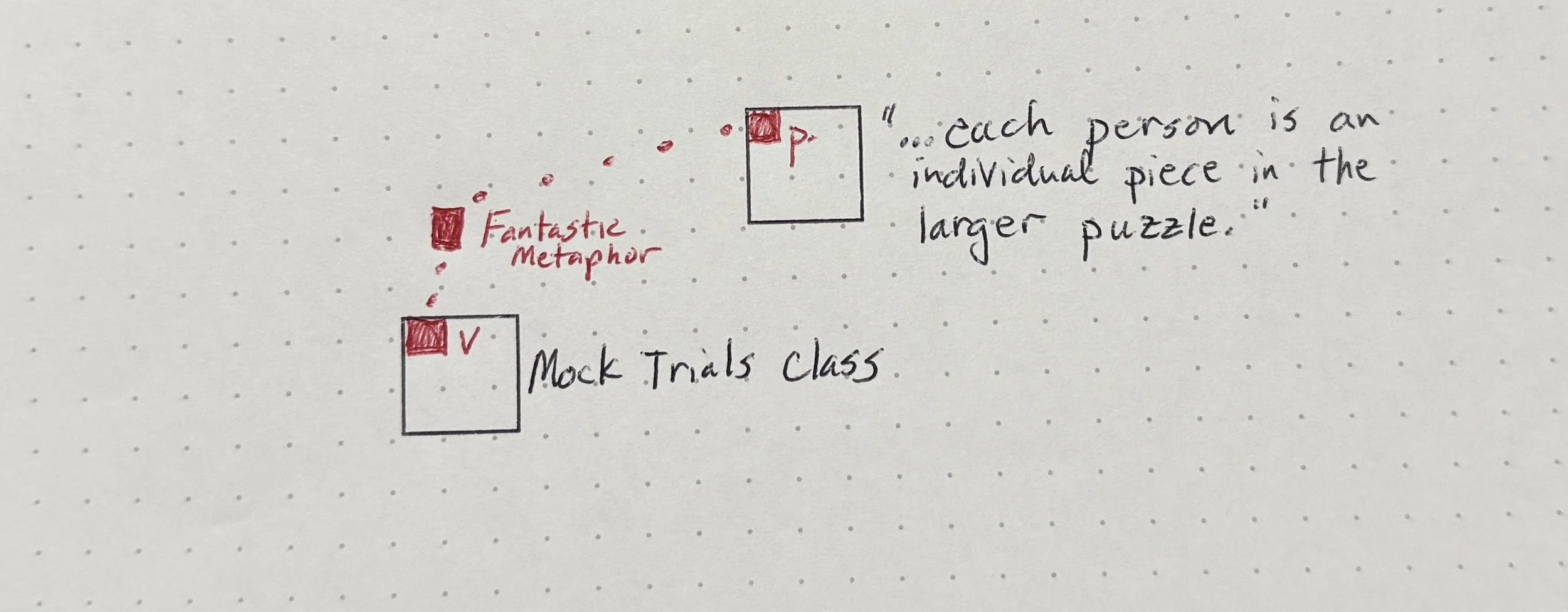
Map 1. I’ve mapped my perspective using Taylor’s metaphor as a lens (point) on our class (view).
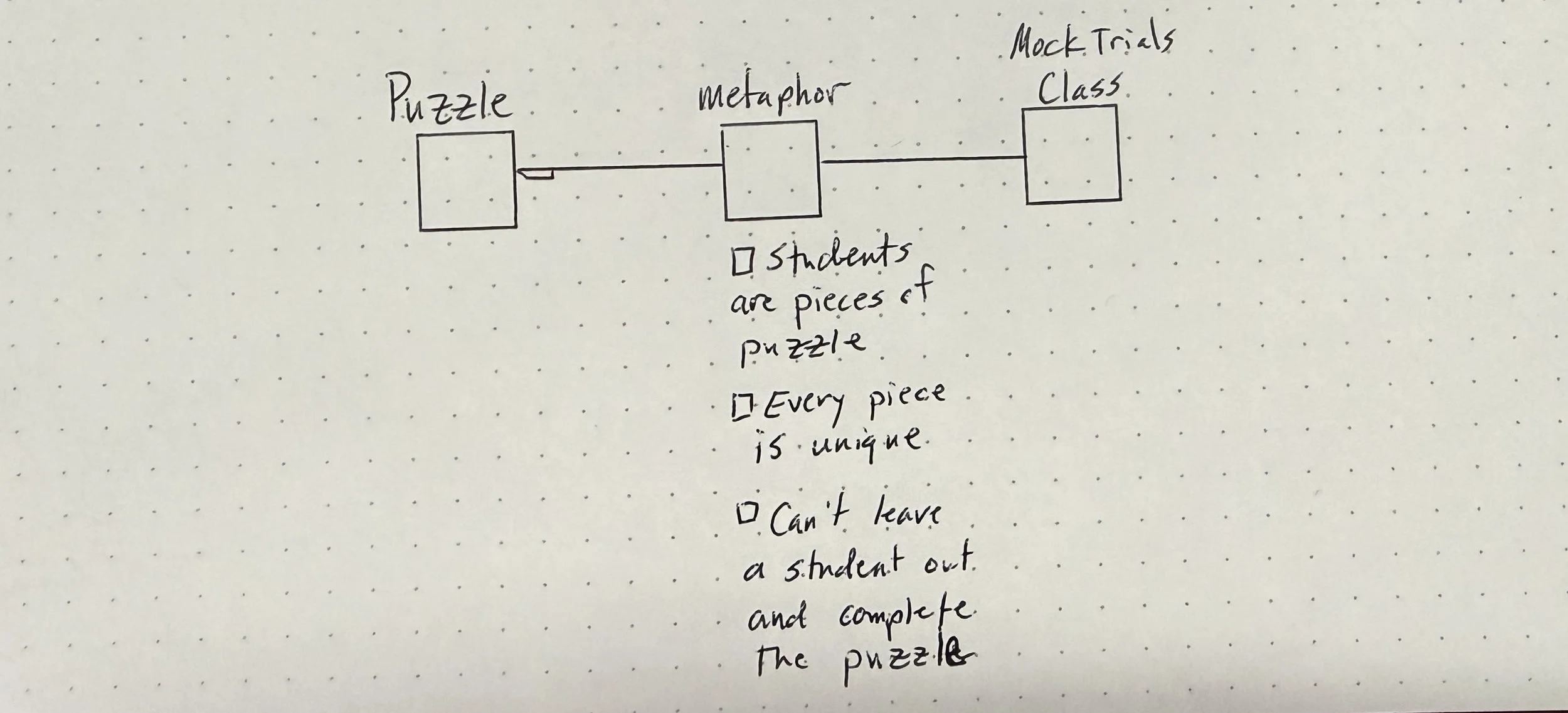
Map 2. I’ve used a Relationship Zoom move here (R Zoom) of my initial mental model of Taylor’s metaphor, “each person is a piece of the larger puzzle.”
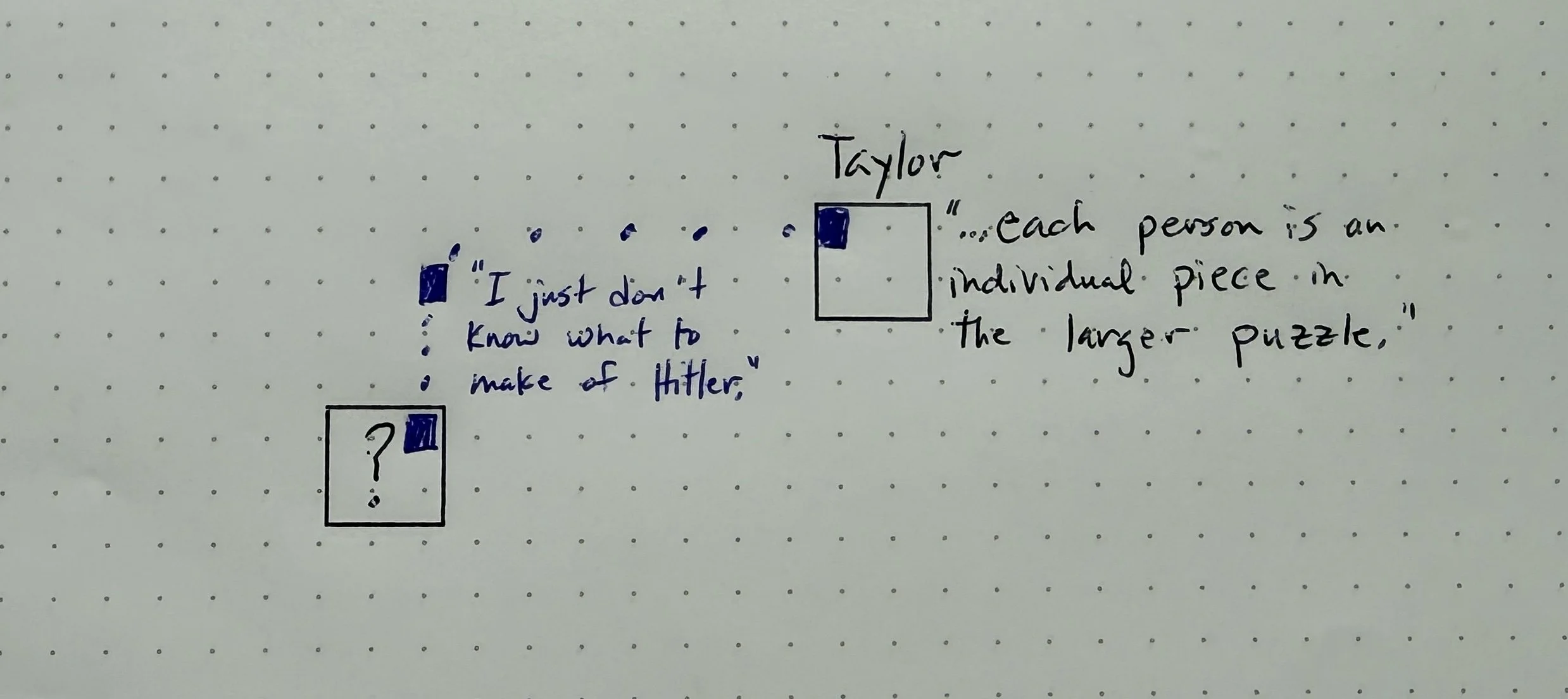
Map 3. Taylor’s point and my point from Map 1 were the same. Her view was quite different than mine though.
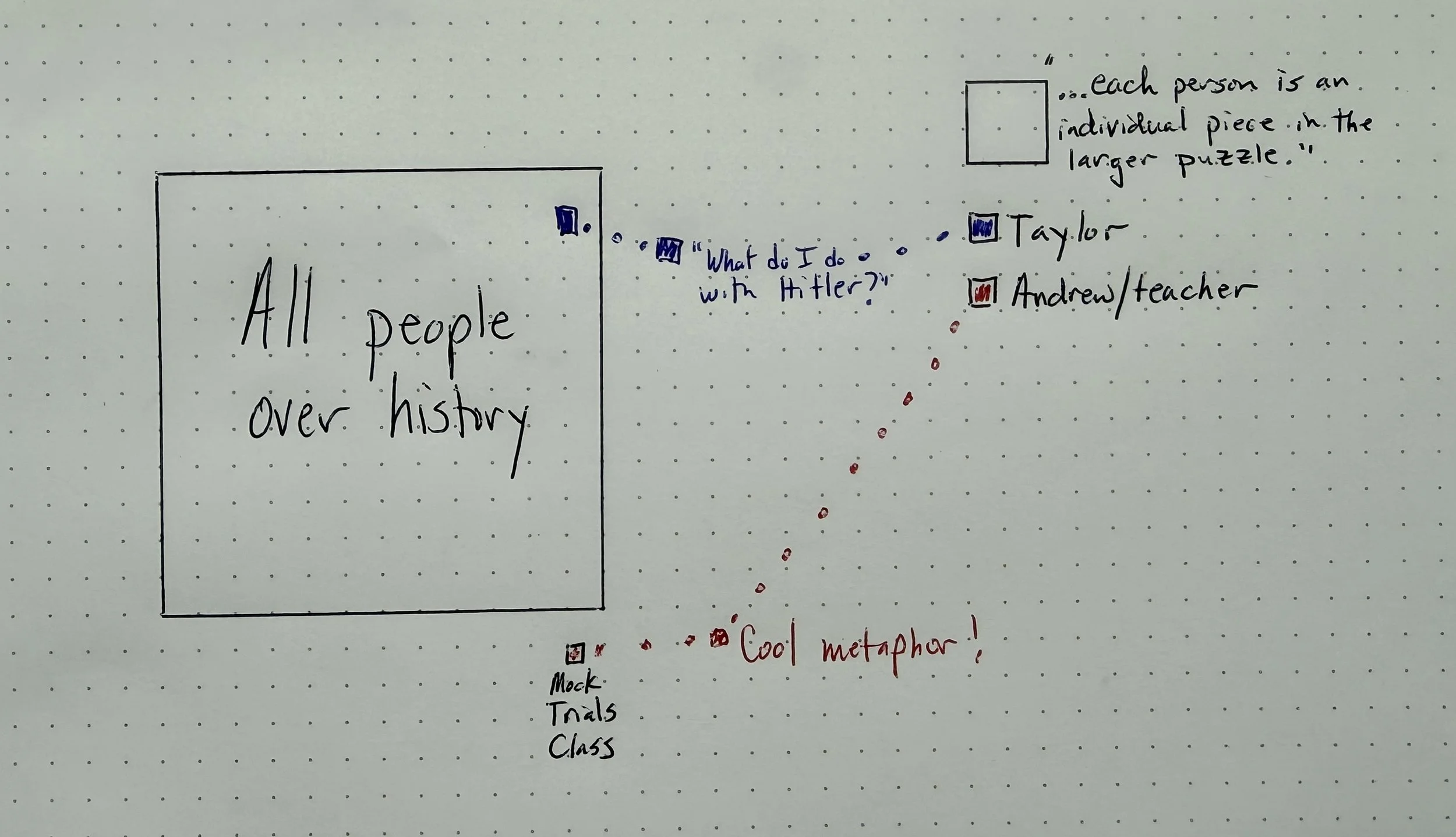
Map 4. Taylor noticed the metaphor while making sense of our Mock Trials class. She then continued to test the limits of the metaphor zooming out to -7. (If the class is 0, then the school would be -1, the town -2, the state -3, the country -4, the continent -5, the world -6, the world throughout history -7.)
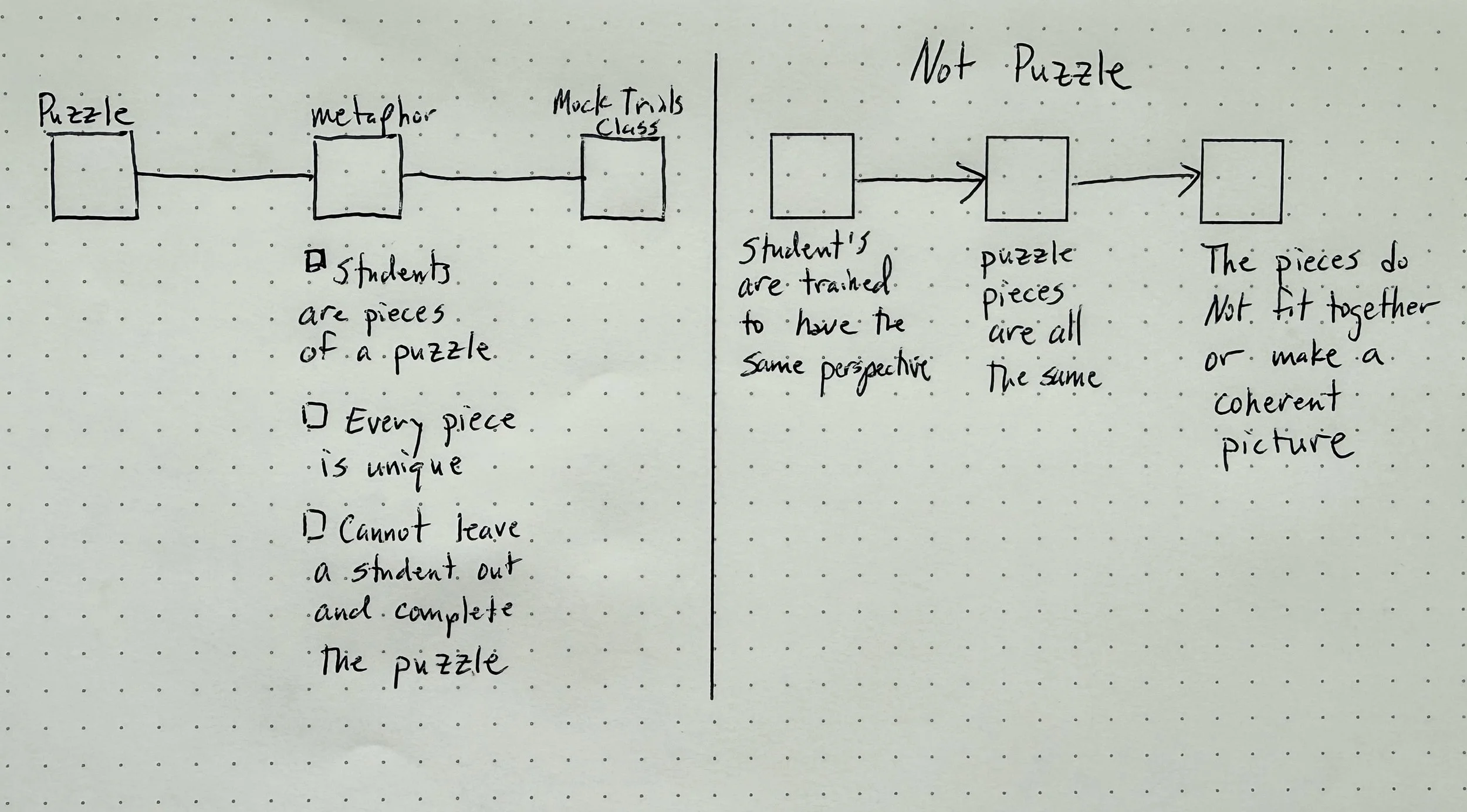
Map 5. I’ve taken my R Zoom map and mixed it with an Is / Is Not move. By making the distinction-other explicit I’ve made this metaphor pop. How might we map Taylor’s thoughts about Hitler?
Updates Since
Derek Cabrera introduced me to Embodied Language Theory (ELT) around 2016 when he recommended I read the book: Louder than Words: The New Science of How the Mind Makes Meaning by Benjamin Bergen. The basic idea of ELT is that all language is embodied by our sensorimotor system. A cool example: if you regularly drink coffee out of a mug, as you read the preceding words the neurons that fire when you pick up your coffee cup and take a drink just fired a tiny bit- that is what cued up your understanding of the words.
Unfortunately when I read Bergen, I only picked up a couple of small practices to improve my craft.
A few years later I taught the Mock Trials class I described here. I knew a big part of why Mock Trials worked was because all the content was grounded in simulated trials, and all the students had lots of experiences watching shows and movies with trials in them. Complex information isn’t as challenging when you understand how to organize it in relation to real life. At the time, I never connected this to Bergen’s book though.
Then in 2024, I was in a DSRP Coaching cohort. During a virtual session Cabrera suggested Lakoff and Johnson’s book Metaphors We Live By to the cohort. This book is probably the seminal work for Embodied Language Theory. As I read Metaphors We Live By, it dawned on me that I’d missed some critical connections in Louder than Words, so I went back and reread parts of that at the same time.
Lakoff and Johnson’s key idea is that we use metaphors to scaffold reasoning from more concrete domains to a more abstract domains. Before going any further, I’m not going to just breeze over the word concrete. If something is concrete we can see and touch it and thus our mind embodies it with our sensorimotor system.
Reflecting on these two books, it occurred to me that ELT research explained both why the Mock Trials class worked well and what my mind did to make sense of Taylor’s puzzle metaphor in this post’s real world experience.
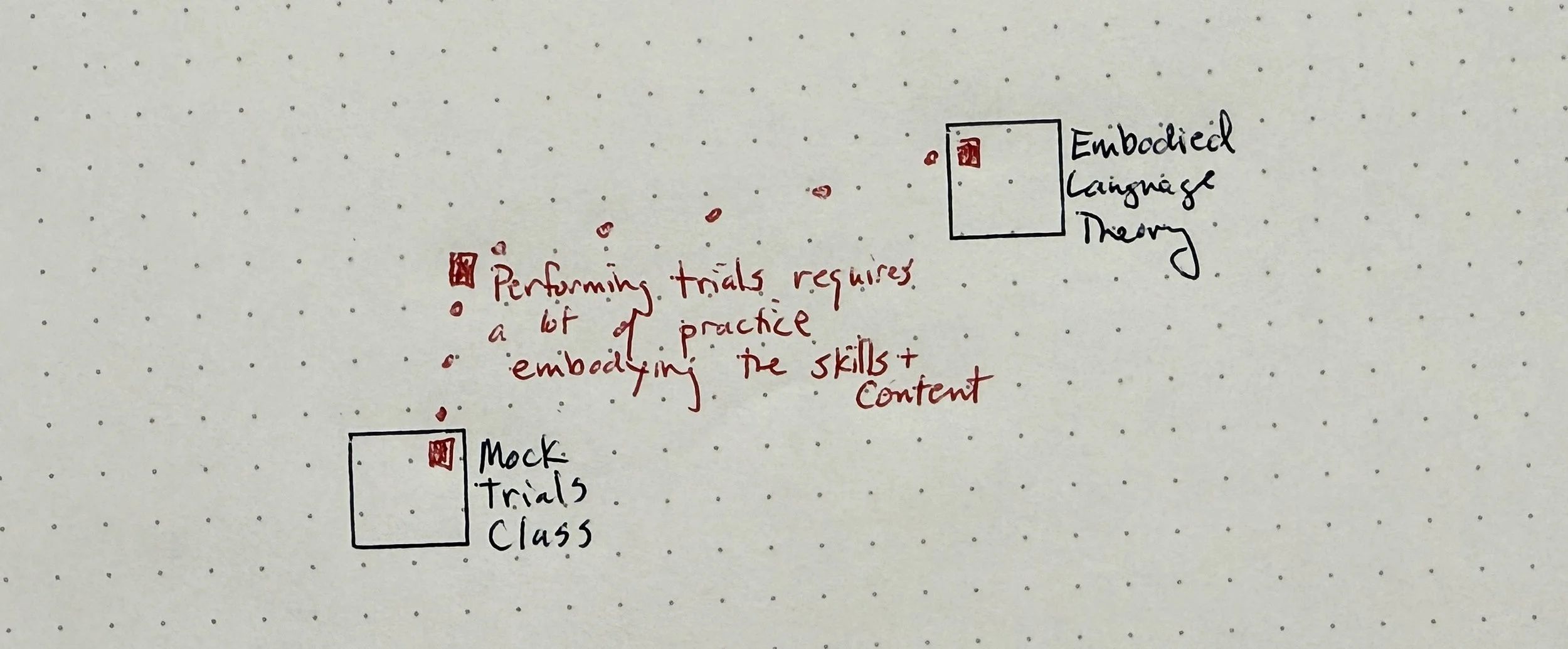
Map 6. Perspective Pattern: Embodied Language Theory as a point on the view, Mock Trials class.
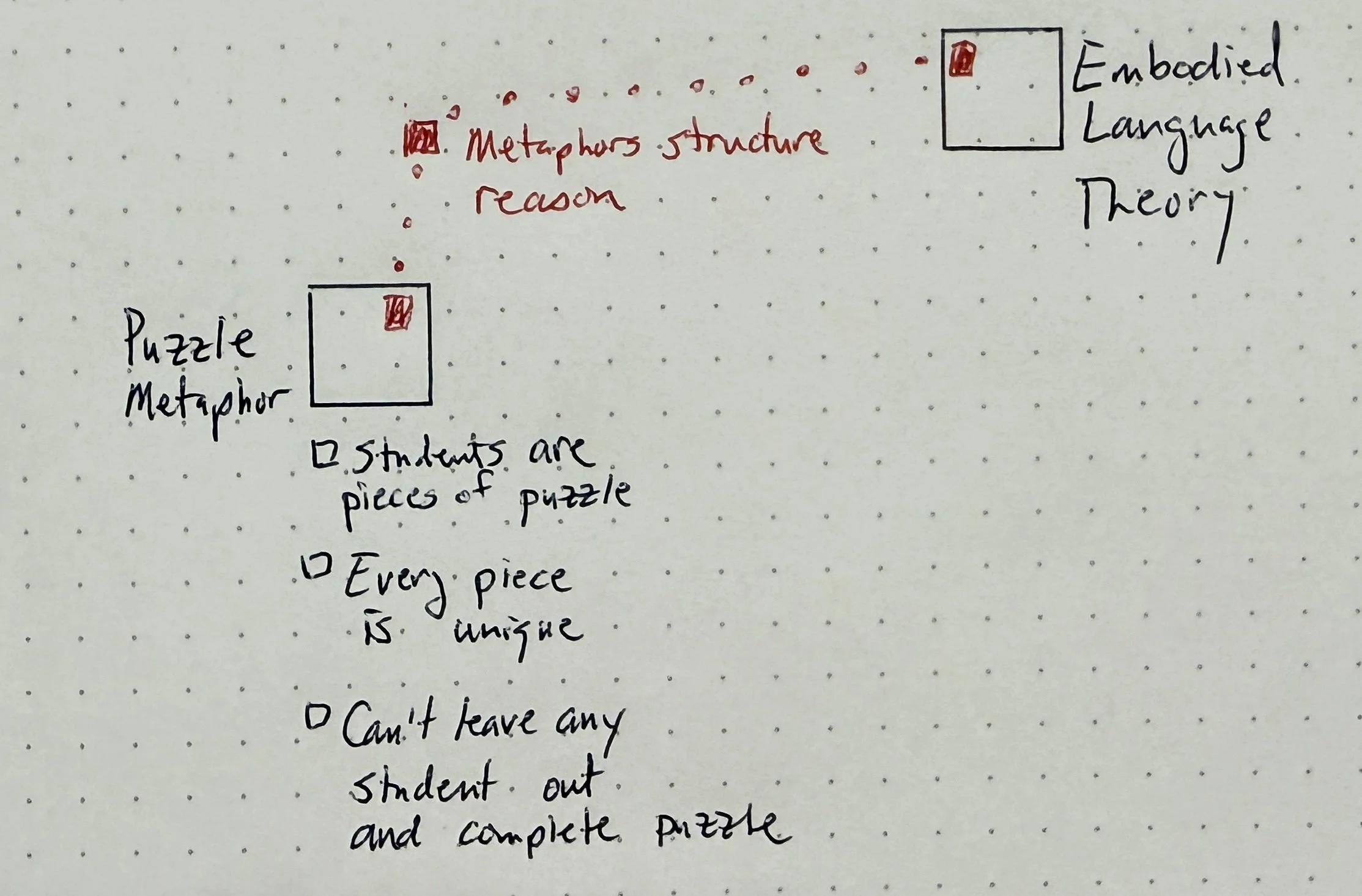
Map 7. I’m simply using the Perspective pattern where Embodied Language Theory is the point/lens on the view puzzle metaphor.
Finally, as I continued to investigate Embodied Language Theory, I more fully realized the importance of DSRP visual-spatial models. I can embody thinking using visual-spatial representations of universal organizational structures: Namely 4 patterns, 8 elements and 3 dynamics. Knowing the precise organizational structures is like knowing exactly what the parts and process of shooting a basketball is- it makes practicing to increase skill much simpler (though like a lot of simple, it takes a while to get the hang of it).
Time to put this down, give abstractions a rest and do something concrete. Rooting for ya!